
The island wakes early
Before the cafes open, before the first scooter starts, someone in every household has already been outside.
They set down a canang sari, a small tray folded from palm leaf and filled with flowers, on the doorstep, on the seawall, on the dashboard of the car, on the step of the shop. The petals are arranged by direction, white towards the east, red towards the south. A stick of incense goes on top, and a few grains of rice.
By evening the rain and the dogs will have taken most of them. In the morning they are made again. Nobody photographs this. It is simply Tuesday.
Water is a shared thing
An agreement that looks like a landscape
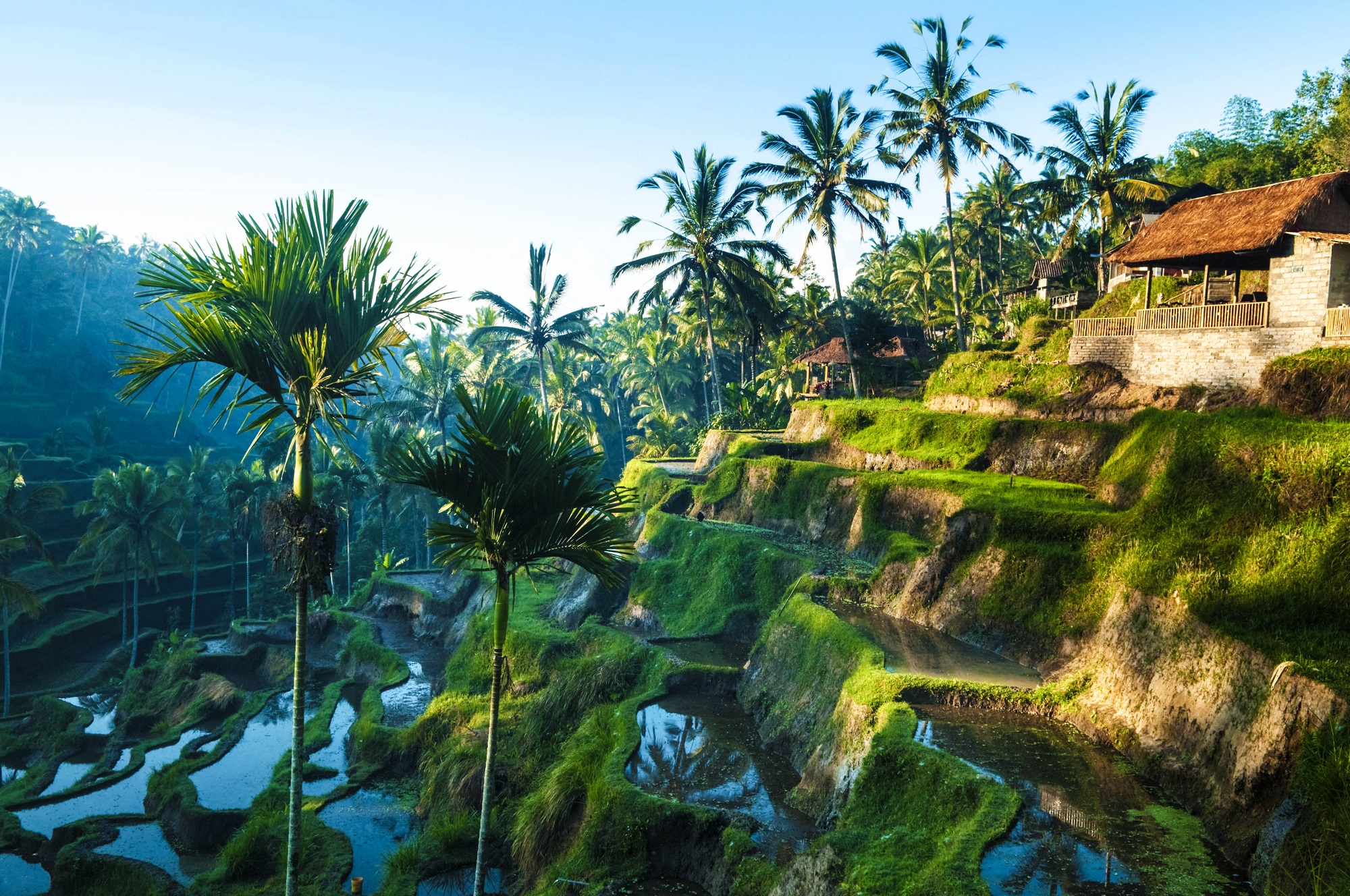
The rice terraces above Ubud read as scenery. They are closer to a contract. For more than a thousand years the farmers here have divided their water through the subak, a cooperative that runs from the crater lakes at the top of the island down through every field to the sea.
It settles who floods first and who floods next, and when the fields should be allowed to rest at the same time, so that the pests have nothing left to eat. The water temples are where those decisions get made. It is irrigation, and it is also religion, and there was never much reason here to separate the two.
UNESCO added the subak to its list in 2012. The farmers had been running it since the ninth century.
Upstream of everybody
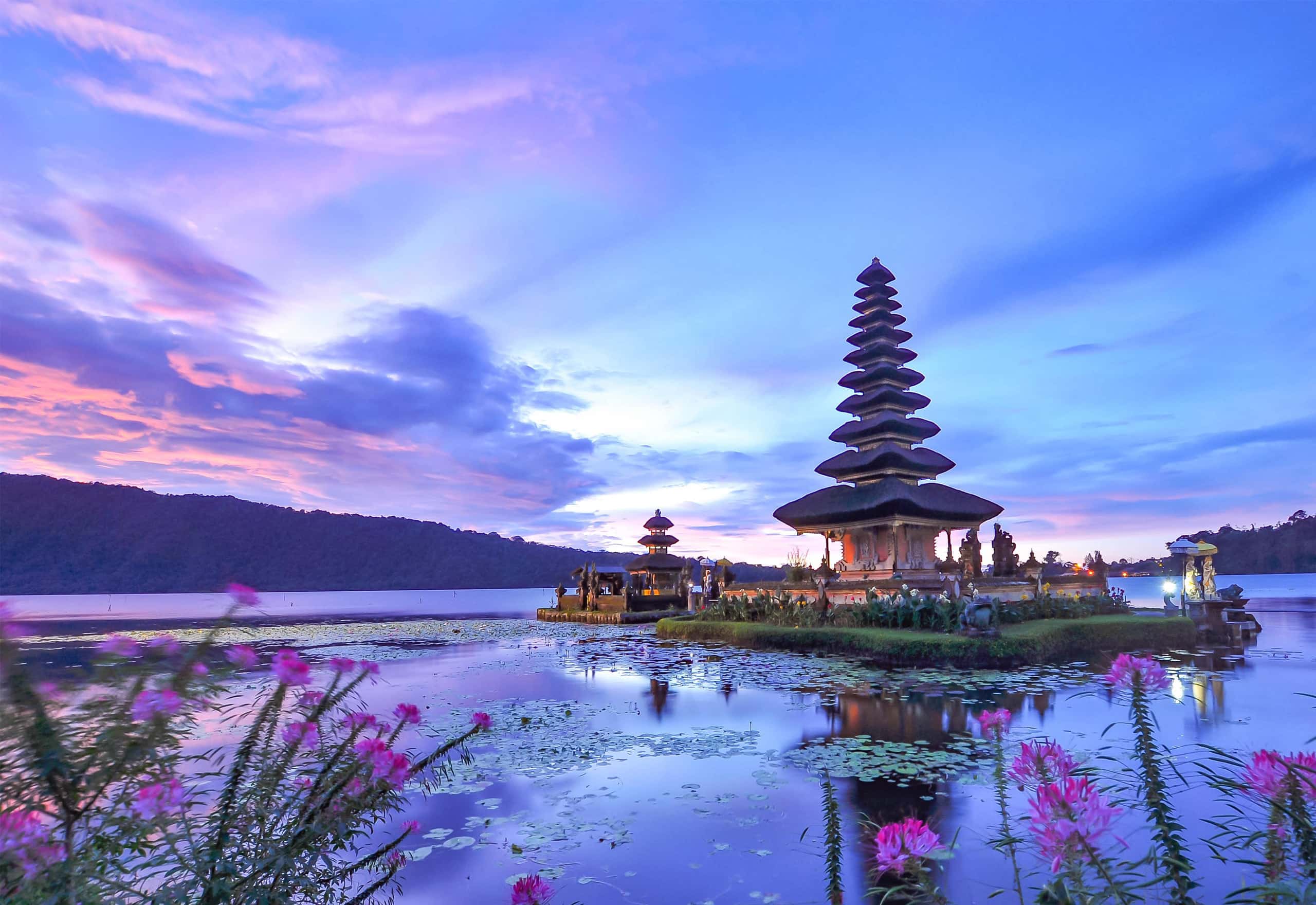
The temple that sits on the lake
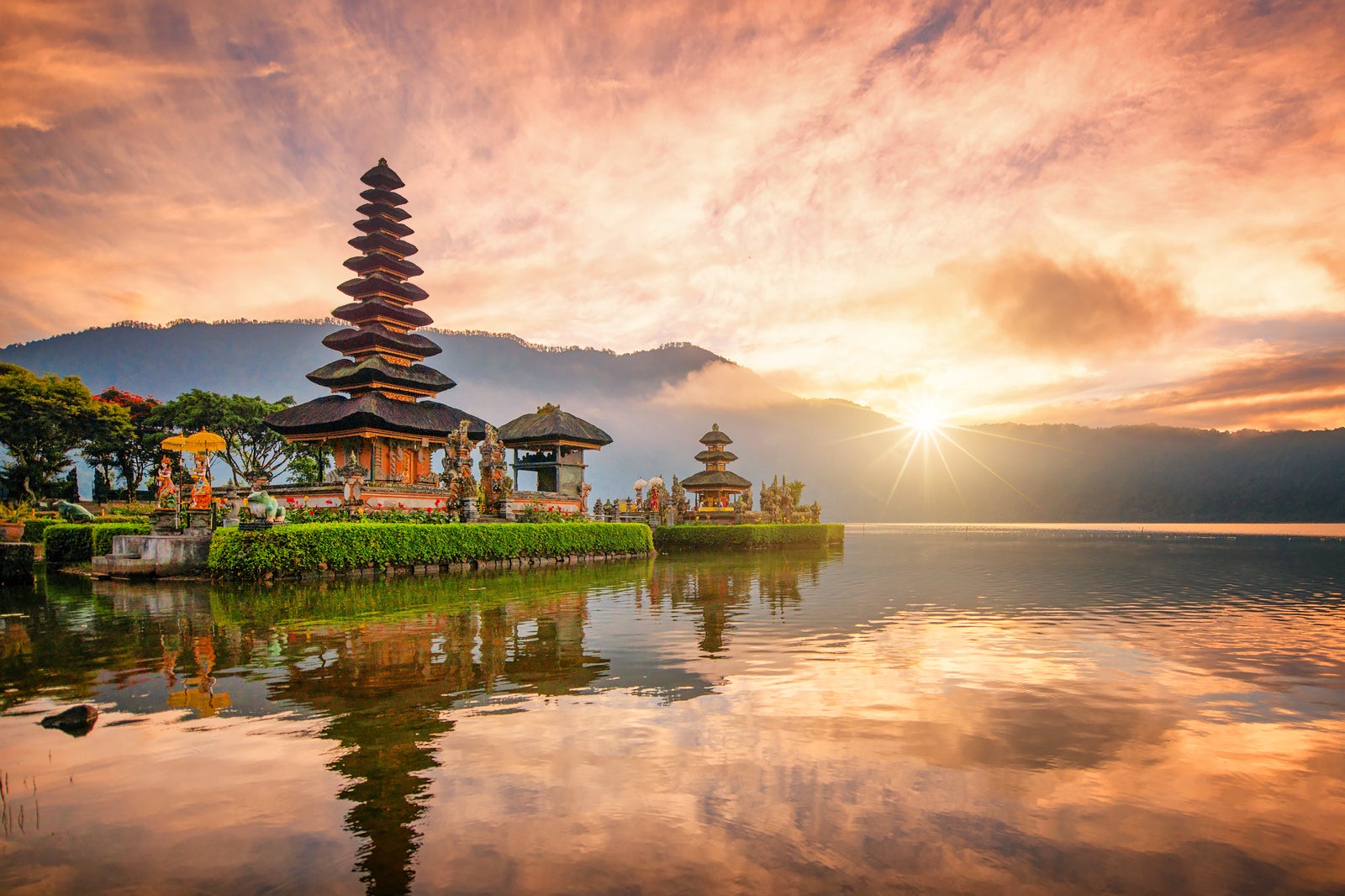
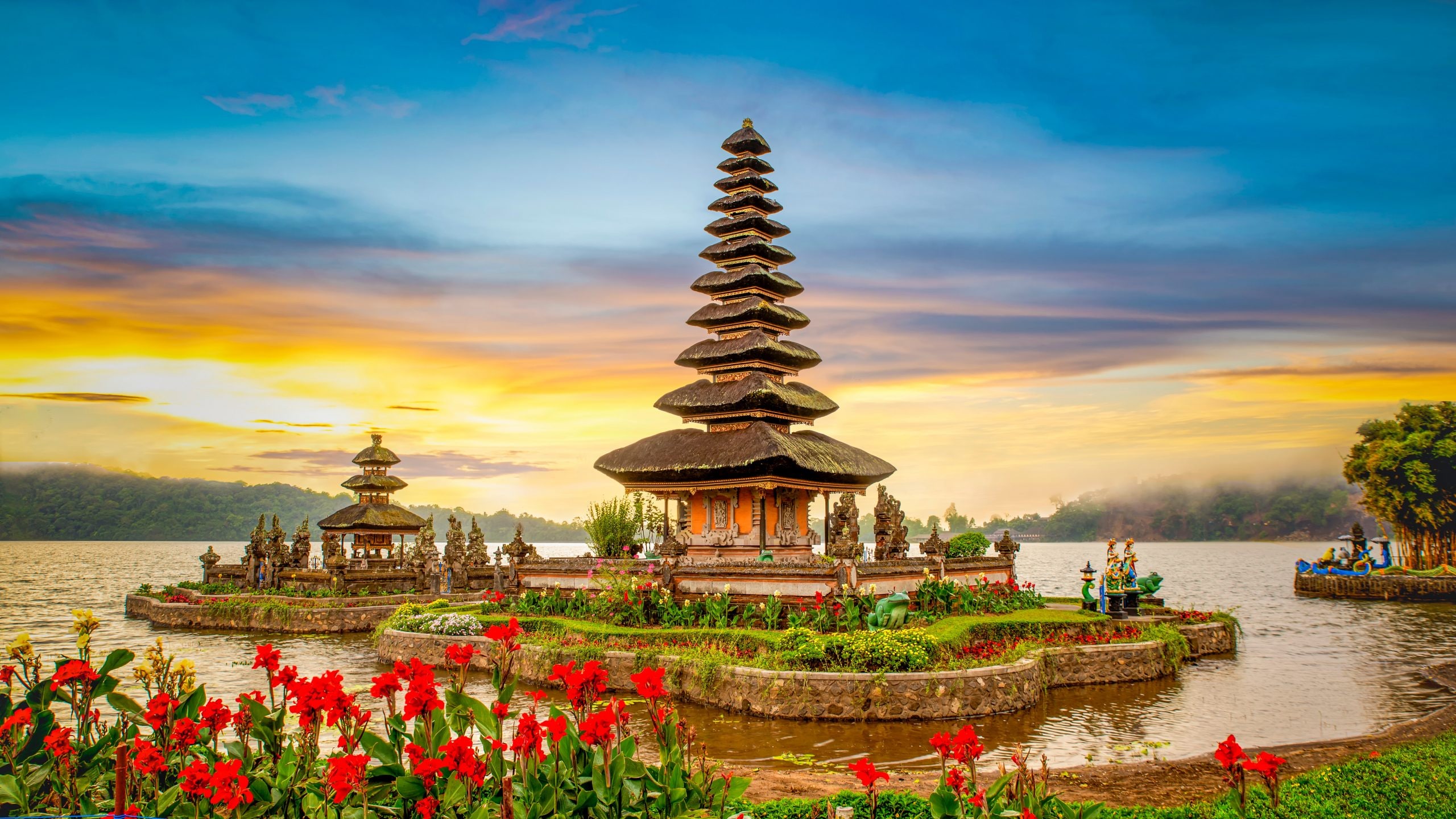
Pura Ulun Danu Beratan stands on a lake in the crater of an old volcano, some 1,200 metres up, where the air is cool enough that you will want a jumper at dawn. The shrines are built right at the water's edge, so when the lake is high they appear to float, and when the mist comes down off the ridge they disappear altogether.
It is dedicated to Dewi Danu, the goddess of the lake. The reason the temple matters is written into the geography: every farmer on this side of the island is downstream of that water.
Once a year, in March
The day the island stops
Not slows. Stops. No traffic, no shops, no work, no fires, no travel. For twenty four hours people stay inside and keep quiet. The airport closes, and nothing lands and nothing leaves, which no other airport in the world does for a religious holiday.
The night before is the opposite of all that. Enormous papier mache demons, the ogoh-ogoh, are carried through the streets to gamelan and shouting, and then burned. Whatever they were carrying is meant to go with them.
Then, in the morning, silence. And because there is no light and no engine noise anywhere on the island, the stars come back over Denpasar the way they look from the middle of the sea.
Smaller things, no less good
The parts that do not photograph well
- FrangipaniYou smell it before you see the tree, and you find the flowers on the ground first, white with a yellow throat, still perfectly intact.
- Gamelan on a TuesdayNot a performance. The village hall has an open side, the orchestra is a group of neighbours, and they are practising because there is a ceremony coming.
- The colour of a rice fieldMirror, then green, then gold, then cut back to mud, two or three times a year, so no two months look the same from the same window.
- Four namesThe first child is Wayan, the second Made, the third Nyoman, the fourth Ketut. A fifth child starts the cycle again. You will meet a great many Wayans.
- Rain with a timetableIn the wet season it tends to arrive in the late afternoon, empty the streets, and be finished within the hour, leaving everything steaming and about five degrees cooler.
- Two volcanoesAgung and Batur, both still active, both visible from the water on a clear morning before the haze comes up.
Come for the view. Stay for the Tuesday.
The sunsets are as good as everyone says. They are also the least interesting thing about the place.